



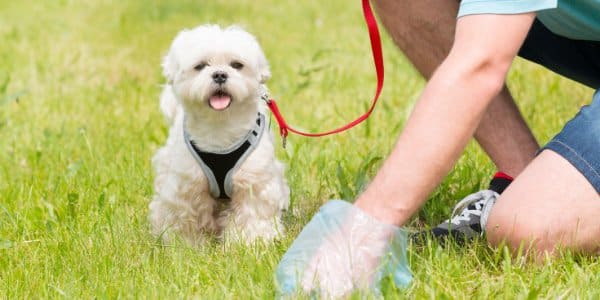
Why is my dog’s poop hard and chalky? Although hard and chalky dog poop does not always signify an imminent concern, if you find your pet’s stools are significantly lighter in colour than average, it’s worth investigating since certain animals do not normally have white feces.
Depending on the reason, you will need to make some adjustments to your pet’s diet to maintain his or her wellbeing.
Why Does Your Dog’s Poop Have a Hard and Chalky Surface?
There are some reasons dog faeces are white, including the fact that a pile left in the yard and baking in the sun would naturally turn white as it dried and degraded. However, white dog poop may also be induced by an excessive calcium intake or by ingesting non-edible products, such as a roll of paper towels.
White or grayish-colored stools may also be caused by medical problems affecting the pancreas, kidneys, or gallbladder. Mold on stools left in the yard for an extended period will even lend your dog’s faeces a white appearance.
Calcium- and Mineral-Dense Diet
According to Dr. Karen Becker’s post, dogs who consume mineral-rich diets develop stools that turn bright within 24 hours and break down more quickly than brown stools. If a dog’s diet includes an excessive amount of calcium or bones, newly passing stools are often white and chalky in appearance. This occurs on occasion in dogs fed a raw diet.
Additionally, an excessive amount of calcium in the diet may result in persistent constipation. If left unchecked, chronic constipation will progress to obstipation, which renders your dog unable to defecate. If your pet has white stools, you might like to try the following:
- Reduce the amount of ground bone in a raw diet.
- One teaspoon of pure canned pumpkin per ten pounds of your pet’s weight can be used with his regular meals.
- Once or twice daily, add a half teaspoon of coconut oil to your dog’s diet.
- Additionally, you can negotiate your dog’s constipation with your veterinarian to ensure his or her comfort and prevent constipation.
Home Remedies For Constipation
Along with canned pumpkin and coconut oil, below are several other constipation treatments to try:
- Assure that the dog receives enough water and drinks daily.
- Increase his water quality by using canned dog food in his diet.
- Increase his amount of exercise since this would aid in his defecation.
- Include dog-specific probiotics in his normal diet.
- Feed your dog food that has a higher percentage of fiber.
- Combine a quarter teaspoon of ginger and a half cup of broth (chicken or beef) in a small bowl and add them to his meal.
- The amount of olive oil in a dog’s food should not exceed half a teaspoon per meal.
Canine Laxatives
If none of the above remedies work, your veterinarian will recommend laxatives for dogs. Laxatone, lactulose, and colace are the most commonly used laxatives.
Laxatone is a cream that is applied to the dog’s paws or nose, then licked off and swallowed.
Lactulose is a substance that can be combined with water, milk, or fruit juice and provided to your dog.
Colace is available in pill, capsule, tea, and enema form.It is not prescription-only and can be used under the care of your veterinarian.
Although certain laxatives designed for people can be suitable for dogs, do not offer your dogs something not specially formulated for dogs without consulting your veterinarian first.

Consumption of Inappropriate Products
Dogs are infamous for consuming items they are not supposed to. When eaten in significant quantities, inappropriate materials such as paper goods may lighten the colour of your dog’s stools and even cause them to look grey or white.
To address this question, aim to restrict your pet’s access to foods other than his daily diet. For instance, hold the bathroom door closed to prevent him from reaching the tissue roll, and store tissue boxes on a shelf.
Using unwanted objects may be a one-time occurrence brought about by curiosity or frustration, but if it persists, the dog might have an illness known as pica.
In this situation, it’s better to contact a doctor who will screen your dog for underlying problems that contribute to PICA and manage your dog with medicine, rehabilitation, or a mixture of the two.
Pancreatic Issues
Exocrine pancreatic insufficiency is a disease in which the pancreas may not contain enough digestive enzymes, resulting in the formation of clay-colored stools in dogs. Typically, this condition is managed with therapy and dietary changes.
Liver Problems
Grayish-white stools, a lack of appetite, weight loss, and jaundice are all symptoms of liver diseases caused by a lack of enzymes or bile intake. There are only a few indicators that the liver is malfunctioning.
Different examinations, including a blood chemistry chart, full blood count, and bile acid examination, will be performed by a veterinarian to assess the correct diagnosis. A recovery strategy will be determined accordingly.
Bile Duct Obstruction
Another risk is bile duct obstruction. The liver produces and stores bile in the gallbladder before it is released into the small intestine by a small duct to facilitate digestion.
When the bile duct is blocked, the stools look light grey rather than brown due to a shortage of bile. This disease is handled due to the underlying illness or accident, including the use of drugs or interventions to alleviate the restriction.
Mould On Faeces
You can find a sticky, fluffy powder in your dog’s feces. This is actually mould that grows on faeces that have been left outdoors for an extended period, especially in moist, humid weather. If this occurs often enough, increase the daily poop scooping regimen to prevent it.
Take Note of Your Pet’s Stools
Stools will reveal a great deal about your dog’s fitness. Generally, whether they are brown and well-formed, there is no need to be concerned. Whether your dog’s feces is white or dark, it’s time to do some study.
Take a sample in a sealed plastic bag and bring it to your veterinarian for testing. You can spot a health condition early on until it becomes a severe problem.

