



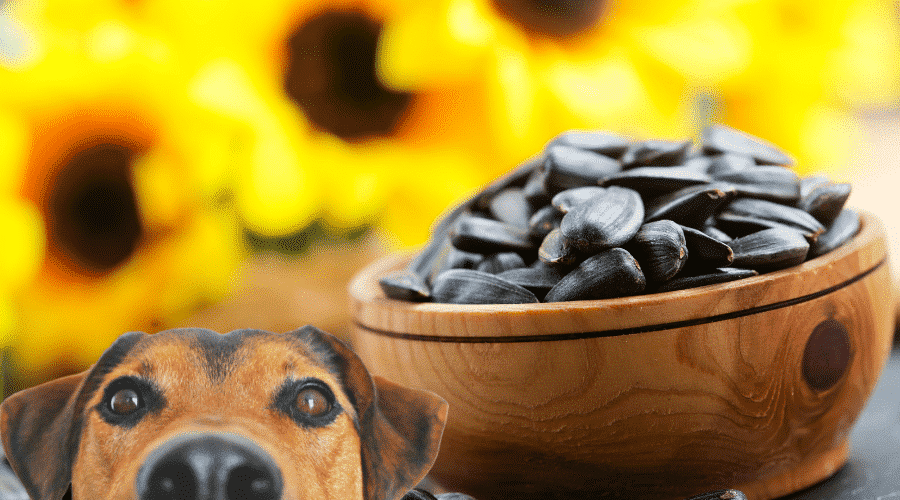

Can Dogs Eat Sunflower Seeds? Everyone loves the nutty, crunchy, and scrumptious sunflower seeds. They make a perfect snack for a warm and sunny day. But they are more than a snack. Sunflower seeds are loaded with essential and healthy nutrients like proteins, vitamins, fatty acids, and minerals. Therefore sunflower seeds are not only healthy for us humans but also dogs.
Yes, you heard it right! The sunflower seeds are okay for the dog to eat. However, you have to pay attention to the portion size and frequency because these delicious seeds also have limitations for your lovely pet. Want to know about them? Keep reading until the end to find out.
What are Sunflower Seeds?
The sunflower plant is a towering, herbaceous plant that belongs to the Asteraceae family. This plant produces the seeds that are called sunflower seeds. This plant is indigenous to the middle regions of the United States of America, and then later, it spread across the world. The sunflower plant produces two types of flowers.
One flower grows at the top, called perimeter flower, and has beautiful bright yellow petals. In contrast, the middle region produces many little fertile and brown flowers. This is the region of the sunflower plant that produces sunflower seeds. The seeds produced as conical in shape have hard outer and soft internal parts. The inner part of the seed is the edible one.
What is the Nutritional Value of Sunflower Seeds?
Sunflower seeds are a powerhouse of Nutrition. The essential minerals and nutrients present in sunflower seeds are Vitamin B3, Selenium, Magnesium, Copper, Potassium, Manganese, linoleic acid, Fiber, Iron, Vitamin E, Vitamin B6, Phosphorous, Zinc, Vitamin B1, and Folate. All of these nutrients help the dog to maintain a healthy lifestyle. A quarter cup of sunflower seeds consist of:
- 6 grams proteins
- 4 grams fiber
- 16 grams fats
- 190 calories
What Are the Health Benefits of Sunflower Seeds?

Sunflower provides essential nutrients like Linoleic Acid, Fiber, Protein, and various Vitamins and Minerals. Following are the health benefits associated with each of them.
Fiber
A healthy balanced diet dog should contain fibers. Fibers in the sunflower seeds help to keep the dog’s gut healthy. It also helps lose weight of the overweight dogs by making them feel full faster. If the dog’s diet is missing fiber, it may suffer from diarrhea. On the other hand, a fiber-rich diet can cause constipation and stomach ache. So you need to be careful regarding the number of sunflowers in a dog’s diet.
Linoleic Acid
Linoleic is also known by the name omega 6. It is an important fatty acid in the sunflower seeds that is crucial for a dog’s health. Since the dog’s body does not synthesize omega 6 naturally, it should be supplemented in the diet. Sunflower seeds are a great source as these seeds are 50% made of linoleic acid. This fatty acid helps prevent diseases like cancer, cardiac diseases, and arthritis. Omega 6 is also great for dogs who have coat and skin issues.
Minerals and Vitamins
The right amount of minerals and vitamins are essential to strengthen the dog’s immune system and safeguard them against diseases. They are important for the health of different body parts like bones, eyes, skin, muscles, hair, nervous system, and joints. The high amount of these minerals and vitamins can be toxic; therefore, the quantity of sunflower seeds needs to be controlled.
Protein
Protein in the sunflower seeds is essential for keeping the dog active and vigorous. This is because proteins play a role in the growth and repair of a dog’s muscles. Dog with healthy bones. Muscles and joints have a reduced risk of arthritis, ligament damage, and other muscle-related problems.
What Are The Disadvantages Of Sunflower Seeds?
Though sunflower seeds are generally safe, you still need to be cautious about the following risks associated with these seeds.
Salted Sunflower Seeds Can Be Toxic
You might think, Are sunflower seeds toxic for dogs? The answer is that seeds are not toxic unless you add salt to them. The high amount of salt on sunflower seeds can elevate thirst level and urination frequency and also causes sodium ion poisoning. Excessive salt can result in diarrhea and vomiting, leading to fever, tremors, and occasionally seizures and death.
Coated Seeds Cause Intestinal Disruption
Unhusked seeds are problematic for a dog’s digestive system; therefore, you should avoid giving seed shells to your pet. Since the hulls and shells of sunflower seeds are indigestible, they get stuck in the digestive tract, thus causing intestinal distress. Dogs don’t know the art of chewing the sunflower seeds and spitting the shells as we do. So they end up swallowing the shells that end up causing stomach aches.
High Amount of Sunflower Oil Is Not Healthy
You might know that sunflower seeds are a rich source of vegetable oil, which can result in vomiting and diarrhea if consumed excessively. Pups are at risk of suffering from pancreatic inflammation because of high vegetable oil, while adult dogs are rather safe in this regard.
Sunflower Seeds Might Arouse Allergy
Some components of sunflowers might arouse allergies in dogs. If your dog is repetitively vomiting and suffering from diarrhea, it might be because of some allergy. If you spot these symptoms, consult a vet and not feed sunflower seeds to your dogs.
How Many Sunflower Seeds are Right For Dogs?
Since you have read both the health benefits and risks associated with sunflower seeds, you must be wondering how many seeds you should give to your pet? Let us answer it for you. Small dogs and pups can eat 5 to 6 sunflower seeds. While adult and bigger dogs can eat around 40-50 sunflower seeds, they will be perfectly fine.
Bottom Line
Can Dogs Eat Sunflower Seeds? Some dogs love sunflower seeds, and it is perfectly fine if you try to satisfy their cravings by feeding them sunflower seeds. But you need to be cautious about quantity because sunflower seeds are beneficial for dogs if given in lesser quantities.
Also, don’t forget to remove the husk of seeds before feeding them to the dog. And don’t even think about salt seasoning because it can be toxic. Rest, sunflower seeds are a great source of healthy nutrients and help maintain the dog’s good health.
Recommended Readings: