



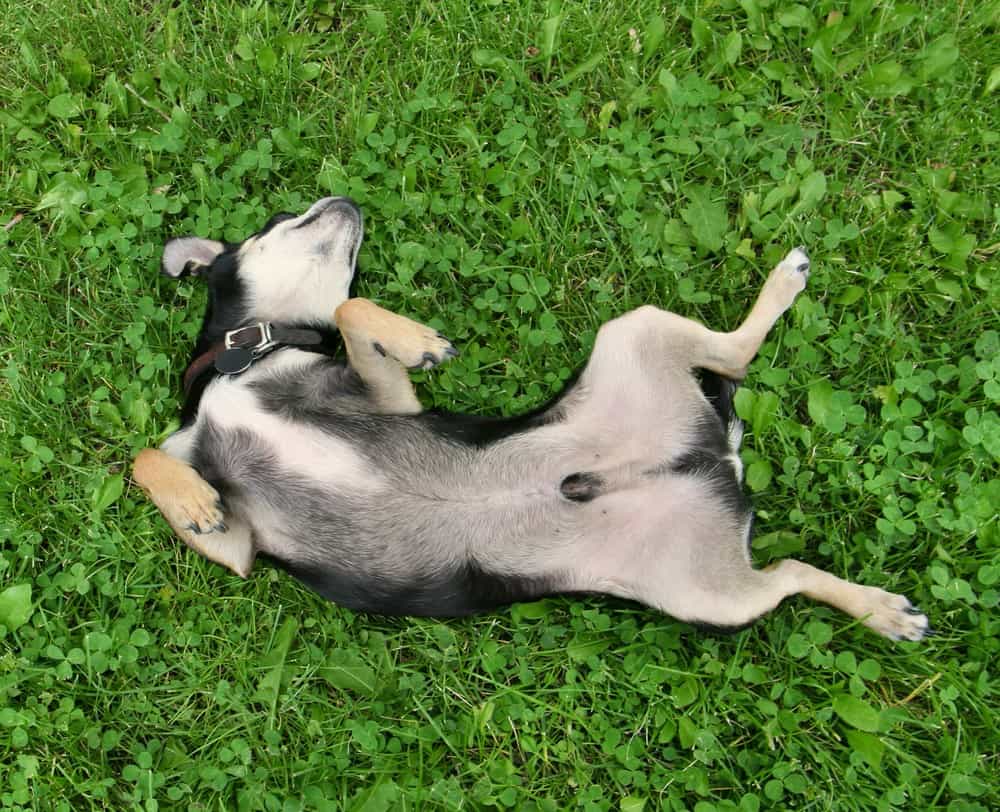
Why Don’t Dogs Have Visible Belly Buttons Like Humans? “Why don’t dogs have belly buttons?” you may have wondered.It’s even possible to hear that because dogs don’t have an umbilical cord, there’s no need for a connection point.These are common myths and mistakes that some people provide.
The first thing you need to know is that belly buttons are present in all dog breeds. All placental mammals do, so dogs are no different. Now is the time to answer the question even more and with impressive details.
Why Don’t Dogs Have Belly Buttons Visible Like Humans?
Dogs Do Have Umbilical Cords
As we have mentioned, all placental mammals have umbilical cords. This cord connects the placenta to the mother and is used to transport blood and nutrients to the puppies. The situation is the same with humans. This is used to keep puppies alive as long as they are in the stomach of a dog.
Why don’t dogs have visible belly buttons like humans? is therefore a partially incorrect question. If an animal has an umbilical cord, it will have a belly button.
After birth, a dog will use its teeth to remove the umbilical cord. This leaves a small scar on the belly of a puppy. However, it is very small and covered with hair, so it cannot be seen easily. That’s why many people believe that dogs don’t have belly buttons at all. In reality, they do, but they are difficult to see.
The point we have mentioned here affects all dog breeds and all puppies. There are differences in how and where the belly button is located, but all dogs do have it. It has been present since birth, period.
An additional reason why some believe that dogs don’t have belly buttons is their shape. In humans, a belly button is round and massive. In dogs, it is a small slit. It doesn’t look anything like a human belly button.
Location Of A Belly Button In Dogs
Now that you know that all dogs do have belly buttons, you may want to find one on your pet. Keep in mind that the location will vary, but in almost all cases, it is located between the ribcage and the abdomen. You should start by touching the end of the ribcage and moving your hand slowly towards the tail. Don’t forget that it is very small and covered in fur, so you need to be patient. Once you have touched a small slit, you have found the belly button. This method can be used for all dogs and many other animals.
As your pet ages, the belly button will be even harder to locate. It will be less obvious, and it will be even more covered with fur, and it can be covered in dirt or something similar if you don’t care about your dog’s hygiene.

Dogs Can Have Problems With Belly Buttons
You know that humans can have a herniated belly button. This happens once the blockage is present and the belly button cannot heal properly. It will start to bulge, and you can see an increase in size. The situation is the same when it comes to dogs.
They can also have a herniated belly button. If you can see it easily and it is much bigger than usual, you will need to react.
Herniated umbilicus in dogs usually happens when it is infected or when the spot doesn’t heal properly. In 98% of cases, you don’t need to do anything. This will go away all by itself, and there is no need to be concerned. In addition, a vet can repair the problem when your pet is neutered or spayed.
This is a relatively simple procedure, and it is very effective. Your dog won’t have the same problem in the future.
It is important to add that newborn puppies must be kept in a clean and safe area. This is primarily so they don’t get any infections that can affect all kinds of things, including a belly button. It is also one of the reasons why breeders charge a lot of money for a puppy.
Some dog breeds are more prone to herniated belly buttons. This specifically affects Basenjis, Pekingese, Airedale Terriers, and Beagles. There is no need to add that all other breeds may have a herniated belly button, but the odds of that happening are lower.
If you have a dog of this breed, you may want to make sure this issue doesn’t happen or at least cure it as soon as it does.
You Should Keep Your Puppy’s Umbilical Cord Stump Clean
If you are a breeder or are planning to become one, this is the section for you. After the birth, you need to wipe down the place where the umbilical cord was connected to the puppy once per day. You can dip or wipe the stump. It is actually irrelevant which method you choose.
Luckily, this should only take 2–3 days. After that period, the stump will fall off, and there is no need to do anything afterward. You can still wipe it occasionally if you like, but most breeders don’t do that.
The time needed for the umbilical cord stump to fall off will depend on numerous factors. Dog breed, eded for the umbilical cord stump to fall off will depend on numerous factors. Dog breed, size, and so much more are a few of them. It is also possible that the stump will fall off sooner or that it will take a few more days. There is no need to be concerned, and there is no need to do anything.
The Final Word
The next time someone asks you why dogs don’t have belly buttons, you will know the accurate answer. After all, all placental mammals have belly buttons, but they come in different sizes and shapes, and they are located in different locations.
The belly button is mandatory when the umbilical cord is present, and there is no way around it. Don’t forget that dogs have a lot of other similarities with humans, and they are actually more similar than you think. For example, they can catch a cold as well. This is just one of many similarities.

