



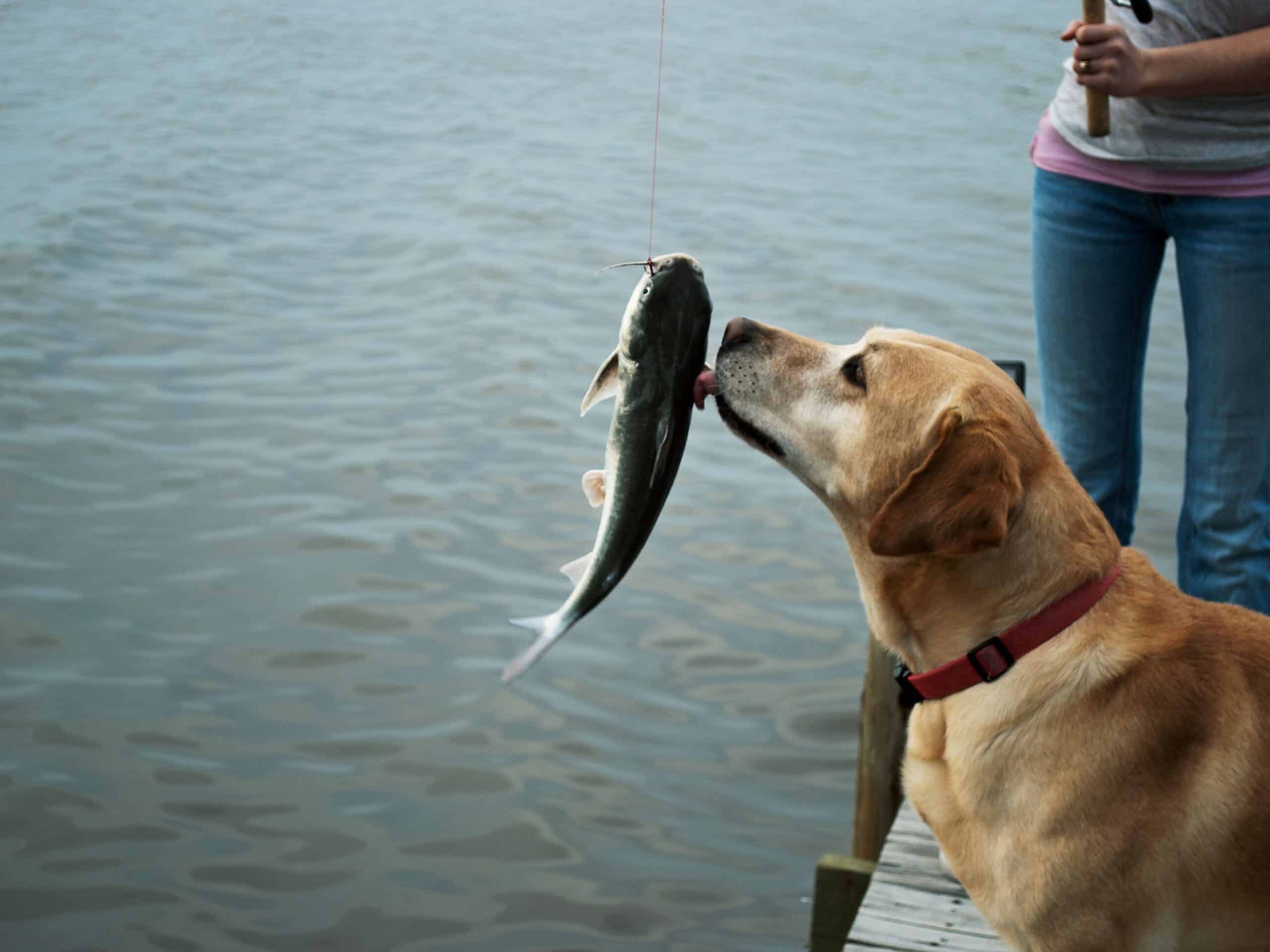
Can dogs die from fish food? If you’ve ever seen two dogs eating together, you’ve also caught one dog snooping around on the other’s tray.
For puppies, on the other hand, the grass is still greener. This mantra also motivates them to nibble on strange items such as fish food.
Can Dogs Die From Fish Food?
Fish food is not poisonous to pets, and it uses the same nutrients as dog food. However, some dogs can develop temporary reactions to fish food. Additionally, certain fish food brands include pesticides, hormones, and chemicals that are potentially harmful to pets.
You’ve just returned home and been told that your dog consumed fish food. Or maybe you stepped in on Bingo munching on what he mistook for kibble by the fish tank. Panic is to be expected as a concerned pet adult.
However, before you get frantic, here is some information about fish food. The majority of brands of fish food include products that are completely safe for your dog. Fish food is mostly composed of proteins and fats. These two ingredients are what first attracted the furry friend to fish food.
Is Fish Food Toxic for Dogs?
Not at all. However, as a responsible pet parent, you must inform yourself of the ingredients used in various fish food brands. According to Polish Proverbs “To taste properly, fish must swim three times: once in sugar, once in butter, and once in wine.” Fortunately, the FDA demands that all pet food manufacturers disclose the ingredients of their items.
Typical ingredients used on the label of fish food contain the following:
- Sea Algae
- Crustaceans
- Fish meal
- Worm meal
- Spirulina
- Insects
Algal Blooms
The majority of labels of fish food contain dehydrated chlorella as an ingredient. As it turns out, your pup will profit from Chlorella algae’s detoxifying properties.
Additionally, chlorella for dogs serves as;
- An immunostimulant
- Purifier of the gastrointestinal tract
- A vitamin, mineral, and amino acid powerhouse
- A protein-dense food
Spirulina
Spirulina is another kind of algae that is used in fish food. It is a bluish-green alga that grows in the majority of ponds. That is what gives pond water its greenish hue and slimy texture. Although Chlorella is beneficial for pets, Spirulina is toxic to any pet other than birds.
Spirulina or blue-green algae toxicity in dogs may result in the following symptoms:
- Vomited
- Irritability
- Suffering
- Drooling excessively
- Disorientation and vertigo
- Seizures, respiratory collapse
- Liver failure
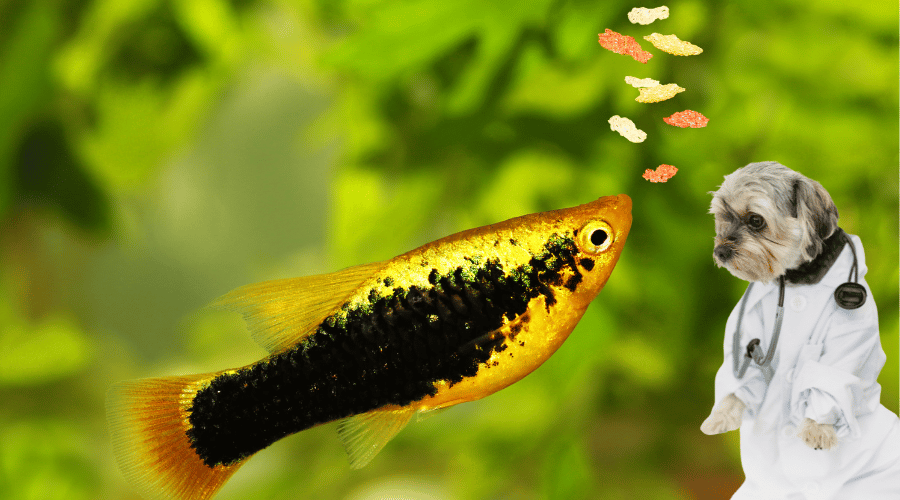


Fish Meal
What happens to the fish scraps from shrimp processing plants? They are finely ground and added to fish food. Is fish meal a dog-safe food? Dogs allergic to chicken are given tuna as a protein supply. Premium labels of fish food use fresh fish rather than fish dinners. This is a high-protein, omega-3 fatty acid outlet for your fish and dog.
Fish and Seafood
Apart from entire seafood, fish food manufacturers supplement their nutrition sources with crustaceans such as squid and krill. Krill are very small crustaceans that resemble shrimp. Both squid and krill are high in omega-3 fatty acids, which are beneficial to your dog’s skin and hair.
Worms
Worms are a common fish food ingredient because, well, we use them to bait fish! The nutrient benefit of blackworm and earthworm is comparable to that of a high-quality fish meal. Worms are not poisonous to dogs when ground and dried. Dogs may be harmed by live worms. Apart from heartworms, earthworm larvae will trigger illness in dogs if consumed.
Insects
Insects such as the Black Soldier Fly are introduced to fish feed to provide an additional source of protein and calcium. Dogs will also eat the larvae of the Black Soldier Fly. The high protein and calcium content of BSF larvae is beneficial for puppies in particular.
Is It Appropriate For Your Dog To Consume Fish Food?
If the fish food includes all of the ingredients mentioned above, it is considered safe for your dog. However, avoid feeding your dog with fish food that includes the algae Spirulina.
The following are several additional concerns to be mindful of:
- If your dog is allergic to fish, consuming fish food will trigger a stomach ache.
- Although consuming a large amount of fish food at once is unlikely to be poisonous, it may result in vomiting and diarrhea.
- Certain varieties of homemade fish food include garlic, a natural fish appetizer. Garlic is very poisonous to sheep.
- The high fat content of fish food can contribute to dog obesity.
Learn here How Much Chocolate Will Kill A Dog.
What Happens If My Dog Eats Fish Food?
Though most fish food is okay, it may still result in minor discomfort for the pet. The most common result of eating fish food usually results in diarrhoea and vomiting, which happen shortly after ingestion and do not last more than a few hours.
That is not to say these symptoms are to be underestimated, as vomiting quickly results in dehydration, so ensure that the dog is provided with lots of water. Although these may be expected after a binge, the dog should not have any major reactions to the fish food.
As an owner, if you witness loose stools or vomit, a veterinarian should be contacted to be safe.
Shockingly enough, fish and dog food are quite similar in their components, except that fish food is richer in fats and proteins. Also, fish food is low in carbs and rice. Despite the lack of toxicity, foods low in carbs and rich in fat can be harmful if consumed in large quantities.
Finally Thoughts
If your dog ate fish food, he is unlikely to have any serious health consequences. However, certain dogs can exhibit minor symptoms such as vomiting and diarrhea. Still, read the label of fish food to confirm it has only dog-friendly products.
However, if possible, steer the dog away from fish food entirely. There is healthier dog food available that is just as crunchy and delicious for your pup.