




The first days after bringing home a puppy are always the most stressful ones for both humans and puppies. How to Teach a Puppy to Heel?
After the initial excitement has calmed down, you might wonder at what point you can begin training your puppy to heel and how to best go about this process.
You can start training your puppy at about four months of age. Before that, it is more important to socialise your puppy, let it get to know all family members, and make sure it feels safe and confident in its new home after being picked up from its mother and siblings at the breeder.
Since dogs, and especially puppies, are very food-motivated, training your puppy involves a lot of little treats as rewards.
What Is Heel?
“Heel” means that your dog is walking directly next to you, rather than behind or in front of you. It is all about paying close attention to your pace or when you stop, which is a challenge, especially for excited puppies that want to sniff everything they encounter.
Since this training takes a lot of effort and discipline for your dog, patience is key. Taking your time with heel training and making sure your puppy knows what to do is crucial, whereas with undue haste you will only lose more time and become frustrated.
Why Is It Important That My Puppy Can Walk At Heel?
Walking at heel teaches your dog impulse control. This is very important for walking in busy areas with lots of traffic and other dangerous distractions.
It is important to train in a quiet place without distractions so that the learned commands are really well ingrained before they can later be practised in a more busy environment.
Going out for a walk should not comprise heel time, though. Your puppy also needs explore the environment.

How To Teach a Puppy To Heel?
There are two very similar methods, depending on whether you want to begin while walking or if you first want to teach your puppy to come to your side when called. In both cases, you should prepare lots of little treats, since puppies are motivated by tasty rewards.
You can additionally use a clicker to emphasize the praise, but saying “yes” or other words of acknowledgment work as well.
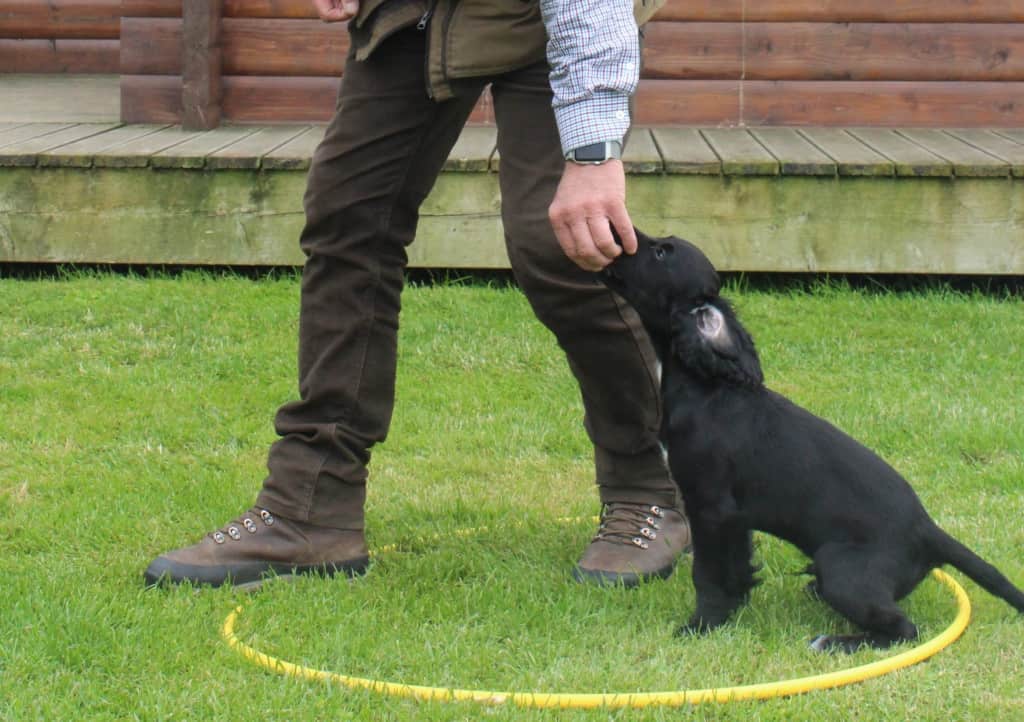
If you want to teach your puppy to come to you, begin by standing still and pointing to the side toward which you want your puppy to walk.
You can choose, of course, either side, but if you want to participate in obedience competitions with your dog later on, the left side is the traditional side for walking at heel. When pointing to your side, say “Come here” or whatever command you want to use in these situations.
If done right, reward your puppy with a treat. Take care to hand over the treat on the side on which the dog sits so that it does not have to cross your body to get at the treat! Praise your puppy for a job well done and click the clicker, if you have chosen to use one.
Final Words
Once you have practised these steps and they work out well, you can begin walking around the room and calling your puppy to your side. Gradually increase your pace, walk in different directions, or turn around so that it gets more difficult for your puppy to find the right position again.
When all this works out well, you can try adding eye contact and non-verbal commands. Never add too many new commands in a single day, though, especially when training a puppy.
It is more important to make sure that your puppy remembers a few simple commands safely over days than adding a lot of commands in a single session.
When you want to start the training while you are already walking, you can use the treat as a lure to call the puppy to your side while strolling through the room.
When rewarded with food and words of praise, your puppy will learn that good things come from walking by your side. Gradually increase the number of steps you take before reward your puppy with a treat, and then intermittently replace treats with verbal praise.