



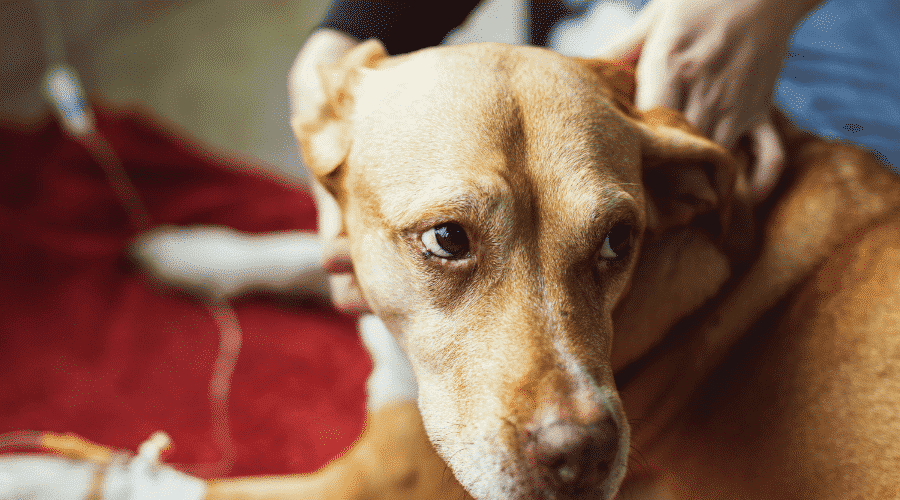
If you are wondering how long will my dog be in pain after spaying, you’re on the right place! One of the most stressful situations for our dog and for us as owners, is the trip to the veterinarian. Especially, when it is an intervention, no matter how routine it may be. So if your dog has just arrived home after being sterilized, you should pay more attention than usual, as it will need special care for a few days.
But, how long will my dog be in pain after the sterilization? Well, in this post we will tell you how to take care and pamper your furry friend so that the spaying postoperative period is as pleasant as possible and with less pain.
Will Spaying Hurt My Dog?
No, castrations are always done under general anesthesia, the dog does not feel anything at all. Veterinarians administer mild sedatives, currently multimodal anesthesia, which combines several types of drugs to reduce the dose of them and act on a better scale.
It is true that when they wake up they may have some discomfort, something completely normal and usual in any type of operation (both in dogs and humans).
How Long Will My Dog Be In Pain After Apaying?
The time it takes for a spayed dog to recover is approximately 5 to 10 days. In the first 48 hours we will see apathy, loss of appetite, less activity in general, after the first two days you will see that he will recover her energy and appetite again. The operation tends to be in the morning and therefore by the afternoon, we will have our dog back home with us and he will need some special care.
Unlike the females, the operation of the male does not have an old risk, once the dog is delivered, we will check that the operation has been a success by observing that he walks perfectly and that his mood is good.
Normally, if your dog is healthy, he should come out as if nothing had happened, that is to say, walking and wagging his tail as always.
Care After Spaying
Although spaying or neutering is a very common process, you must remember that the dog will undergo surgery and will need all the care required to avoid complications.
It is necessary to adjust its feeding to avoid overweight. It is likely that the surgery will affect the nutritional needs of the dog, so from the first moment we should regulate his diet.
The administration of drugs, under the orders of the veterinarian may be necessary to control pain and inflammation, or infection if it appears.
1. Rest.
Prepare your faithful companion his favorite corner and the most comfortable bed he has so he can rest during these days of recovery.
2. Cleaning.
The wound should be cleaned daily in aseptic conditions, avoiding any contact with any source of germs.
3. Prevent licking or biting the incision to avoid tearing out the stitches.
The stitches will normally be removed after 10 days, to avoid accidents you can use an Elizabethan collar, at least during the time you cannot watch him.
4. A daily exercise routine.
will be optimal for your furry friend; it is not only a useful way for them to release stress, but it will also help them get rid of all those calories they have overeaten.

Feeding After Spaying or Neutering
When you get home, offer your dog water but not too much as it could make him vomit. When he is awake and active, you can offer him a small amount of food (half the usual amount). If he is sick or refuses to eat, do not force him and offer it later.
It is common that the first day, your dog’s appetite should not be the same as usual. However, if things do not return to normal within the first 48 hours after surgery, you should call your veterinarian.
Also, it will be better for your pet in the future to eat food for sterilized animals.
Will Their Behavior Change?
Yes, after castration, behaviors related to sexual instincts, which often produce dominant behaviors, aggressiveness and roaming in males, are reduced. It is not true that they become more apathetic or sad.
Will The Dog Be Able To Go To The Bathroom Normally After Castration?
The first time after anesthesia, most of the time several hours, control of urination and defecation is affected in animals, the best solution would be to place an absorbent diaper under the pet.
If your dog does not go to the bathroom regularly within three days after surgery, you should contact your veterinarian.
As for bathing, the prudent time to bathe the dog should not be before 10 days; since, if you risk bathing him before the indicated time, not only could the wound open up, but also, you could catch an infection.
How To Recognize If Our Pet Is In Pain?
Pain can vary in intensity and identifying it with the naked eye is sometimes complicated. Fortunately, there are visual and behavioral signs that can help us detect what kind of pain they are suffering and in what intensity.
If your dog has trouble sleeping, is distracted, or reacts badly to the slightest rose, it is a mild pain. Moderate pain is when your dog does not respond when you call him, is uncomfortable when resting, sobs, tries to lick or scratch the wound, does not interact with his surroundings and turns away from the wound.
High pain is when the dog has excessive growling, weight changes in our pet’s body, very little desire to move, crying and threats of biting and is when it is best to call the veterinarian.
In addition, it is necessary to take it to the veterinarian if it sheds ichor, a pinkish-yellow liquid that remains in the blanket, this is normal. If the color of the blood becomes bright scarlet and flows profusely.
Spaying Has Beneficial Effects On Your Dog’s Health
As it avoids diseases or complications related to the reproductive system. There will also be changes in their sexual behaviors and behavioral alterations.
So it is a really necessary process for them, which requires little time and has a relatively short recovery, where they will need basic care. Dogs usually recover quite well and fast from this, so it will be just a few days of change and soon everything will be back to normal.

