



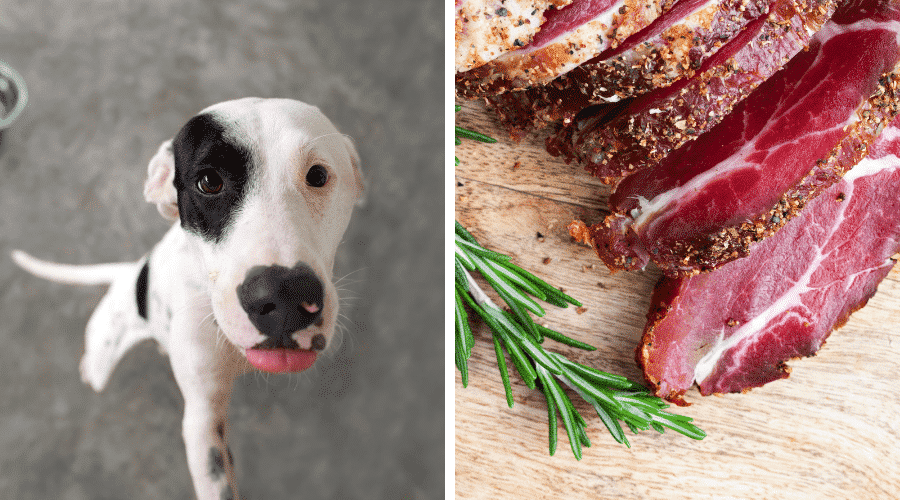
Can Dogs Eat Beef? Your dog will eat practically everything you put in front of him. Their stomachs, though, aren’t quite as developed as their owners’. As a pet owner, you must still be conscious of what you feed your dog to avoid a health problem. Let’s take a look.
Meats that are suitable for feeding to dogs include:
- Chicken: There’s a reason why chicken is one of the most popular foods for dogs to eat. Chicken is a slice of lean meat that is high in protein, which is beneficial to your dog’s energy and muscular mass. Chicken is also high in nutrients that promote healthy skin, lustrous coats, and bone health.
- Steak and beef: Red meat is another good source of protein for your dog. Contains fatty acids that can aid in the maintenance of muscle tone and joint support. Red meat, like chicken, contains Omega-6.1.
- Lamb: Lamb is a slice of delicious meat for dogs with dietary sensitivities. It also includes nutritional lipids, which aid in the maintenance of skin, hair, and muscle. Learn more here, Is Lamb safe for Dogs?
- Turkey: Another excellent meal for dogs with food sensitivities is turkey. Turkey is a slice of lean white meat with high protein content. Furthermore, turkey is excellent for muscular support and maintenance.
Any processed meats, such as sausage, bologna, hot dogs, and so on, should be avoided. Also, avoid offering your dog rib bones since they are exceedingly fragile and can cause stomach and throat injury.
Can Dogs Consume Raw Meat?
Raw meat diets are a popular topic of discussion among dog owners. Many people say this is a better diet since it closely resembles a dog’s natural diet. However, there hasn’t been enough study on raw meat diets to tell if they’re safe for your dog.
They can consume raw meat that may contain salmonella or listeria spores with no trouble since their stomachs are more acidic and their digestive tracts are shorter- and before you worry, certain bacteria are entirely natural. Keep in mind that we’re talking about actual, entire, fresh food.
We, humans, have more sensitive digestive systems, allowing those germs to wreak havoc on us, which is why we’re so wary of naturally occurring infections in our diet.
That’s not to imply that a large dosage of salmonella or listeria from infected or rotting 4D meats wouldn’t be an issue for your dog. Again, it all comes down to executive sources.
Because your dog will eat practically everything, it doesn’t imply you should feed it anything. This list of meats your dog can eat and how to cook them might come in handy the next time you’re arranging a BBQ or picnic and your dog wants to join in on the fun.
Raw Meat’s Advantages
The meal is functional- Each food we select to put in the bowl directs, affects, and molds our animal’s health-not only weight or performance, but also happiness.
Food is the cornerstone of your and your dogs’ health. Consider some of the advantages that entire foods, such as beef, may provide your carnivore.
Raw beef contains nutrients such as protein, which is a building block for muscles, ligaments, skin, and cell maintenance, as well as energy for chasing a squirrel or chasing a ball. Beef also contains the important fatty acids Omega 3 (EPA and DHA) and 6. Omega 3 fatty acids nourish and moisturize the skin, resulting in healthy skin and a lustrous coat.
Furthermore, omega 3 has anti-inflammatory qualities that aid everything from the heart to the immune system. Consider this covering from head to tail to be just one of MANY reasons dogs require essential fatty acids in their diet.
What Makes Raw Beef an Excellent Choice?

Your dog, as a carnivore, requires meat to survive. Consider what dogs ate before they became part of the family. What did generations of animals consume while they were separated from us? They couldn’t have hunted wild kibble… No, a carnivore’s diet is supported by a dog’s biology.
Dogs and grey wolves share 99.9 percent of their DNA. We’ve bred animals for certain proclivities (think hunting or herding) and looks (look at you pugs), but we haven’t bred out their DNA.
Since domestication, their basic physiology, i.e., internal anatomy, has altered little, which also implies their food requirements haven’t changed. Examine the insides of their mouths-Large canines and sharp molars are used to pull and shred the meat off the bone. They have little to no salivary amylase (the enzyme required for carbohydrate breakdown) in their tongue. A dog’s food should be tailored to its anatomy.
As a result… Meats and organs account for around 70-80% of the total. And, of course, a low-carbohydrate diet, with no more than 25% of calories coming from vegetables, fruits, seeds, and even small amounts of predigested grains (the less, the better). But, before you toss a piece of raw beef into your carnivore’s dish and call it dinner, there are a few things you should know.
What is the maximum amount of raw beef you may give your dog?
The quantity you serve is mostly determined by how you use raw beef-as a meal topper, as a treat, or as part of a raw food diet.
It all comes down to kcals, which are the number of calories a dog needs each day based on their activity level and age.
If used as a snack or training reward, nutritionally balanced food should constitute 90 percent of your dog’s regular diet. And, as tough as it may be to refrain from indulging in a few extras at snack time, sweets should account for no more than 10% of calorie consumption.
Why Is Beef Only One (Big) Part Of A Carnivore’s Diet?
This mastiff-sized step for your dog’s health is undoubtedly adding a serving of raw beef to the dish or throwing in spinach, but it is the first one. Beef, as well as items like spinach and blueberries, should be part of a well-rounded diet for your dog.
Carnivore-friendly real, raw whole food ingredients:
- rich in protein from meat (70-80 percent per recipe- all USDA inspected)
- carbohydrate-free (15-23 percent from nutrient-dense fruits, veggies, and seeds)
And what about the traditional raw beef on top? Diets based on whole foods, such as the Simple Food Project’s Beef & Salmon Recipe, are already nutritionally balanced (no synthetic vitamins here, folks).
Conclusion
Can Dogs Eat Beef? Lean meat is safe to feed to dogs. Beef is, in fact, a frequent component in many dog meals. It’s a great source of protein as well as a variety of vitamins and minerals that your dog requires for good health. The meat you give your dog should be simple, with no sauces or seasonings added. It’s always a good idea to consult with your veterinarian before making any changes to your dog’s food to ensure that it’s healthy for your pooch.
Check out my other article, Why Do Dogs Shake Off Sometimes?

