



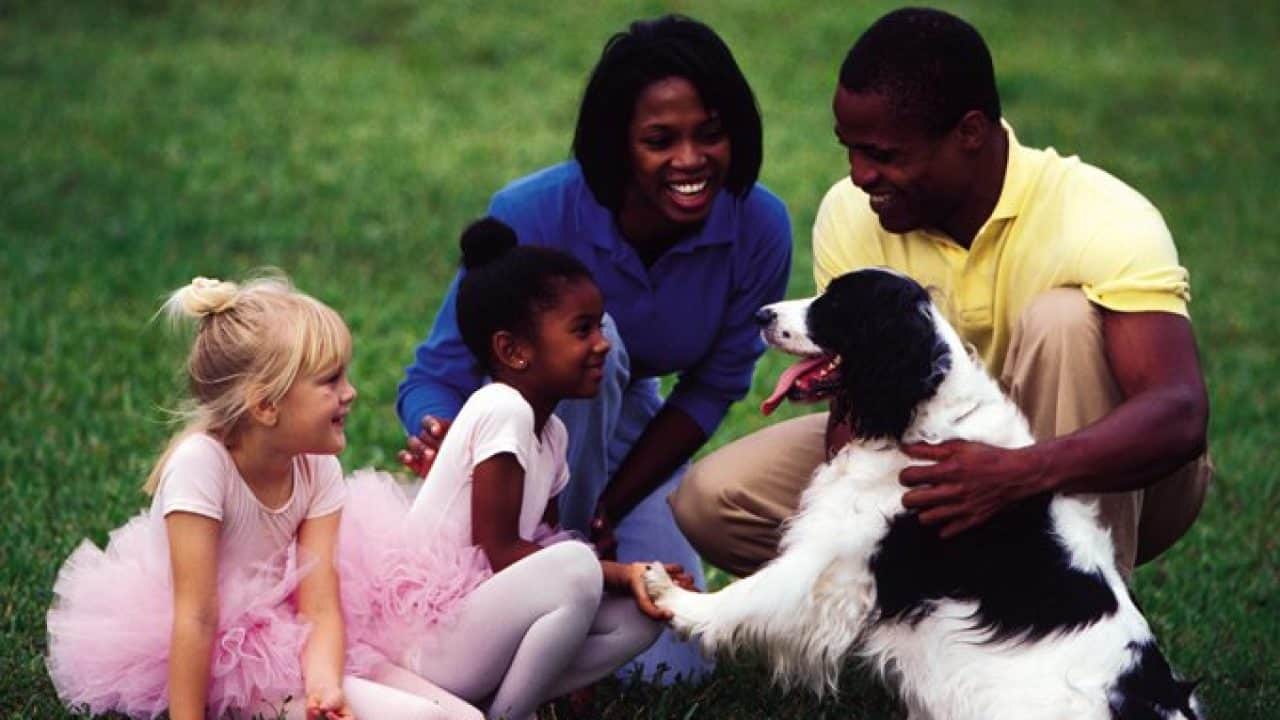
Dogs with a simple, people-friendly temperament are ideal for families, but instilling this behaviour requires a strategy that shapes them from a tender age. There’s a critical window when dogs become overly sensitive to their surroundings, predominantly from four weeks to sixteen weeks old. Nevertheless, you can still teach aggressive dogs to be affectionate, even when they’re fully grown. Here are five tips for raising a people-friendly dog.

5 Tips for Raising a People-Friendly Dog
Use Positive Reinforcement When Training Your Dog
Simply put, positive reinforcement is the appreciative approach that dog owners use to train their pups to follow basic commands and instructions. It’s an effective method to get your dog to accrue people-friendly behaviour with minimal effort. Technically, you train your dog to obey commands and do the right thing, subsequently rewarding them with a treat. For instance, if your dog stops uncontrollable barking on command, give them something for appreciation. This way, they’ll eventually learn to do it repeatedly.
Training your dog to do the right things makes them more people-friendly, as they’re less likely to bark at or snarl at visitors with the habit already instilled in them. Although some other forms of training work on dogs—including aggressive dominance training—they don’t make people-friendly dogs. Instead, such training aggravates their aggressiveness and is ideal for guard or herding dogs. For proper positive reinforcement training, here are tips to make it effective.
-
Make good timing with rewards
Make the rewards timely. Good timing makes your pooch associate the prize with the action you desire a few seconds after they do it. Please don’t wait for more than a minute before verbally letting them know that you’re down with their behaviour because it’s less effective. Besides, if you reward them a minute later or so, they may think that you’re happy with something else they did, and if it’s terrible, it will ingrain itself in their minds as a
-
Be brief with your commands and instructions
Make succinct commands when instructing your dog to do something. It would be best if you used concise words like “stop” and “sit” rather than “Jack, can you go and sit on the couch?” Being brief makes your dog understand your commands better and can make him easy to control around people.
-
Maintain consistency
Consistency is critical when training your dog for a people-friendly temperament. Use similar words to signal specific actions, since varying terms for a single action confuses them. Dogs learn distinct word algorithms and need consistency to incorporate them into their behavior.

Let Them Stay With Their Mothers For Eight Weeks
Another tip out of the five tips for raising a people-friendly dog is letting your puppy stay for at least 8 weeks before separating them from their mother. A puppy’s learning window ranges from birth to four months old, where they romp with their littermates and acquire doggie intuition. It’s in this period that they develop canine manners and learn about submission and dominance.
Besides, they also know to share food and toys and have acquired patience. Patient and submissive dogs are people-friendly, which enables them to gauge ideal situations to use these skills.
AKC advises that you let your puppy stay for at least six weeks before separating them from their mother and siblings if it calls for it. However, the organization recommends you wait for a minimum of eight weeks since early retrievals affect them even in adulthood.
Such dogs lack doggie instincts they could have learned from their mother’s and sibling from a tender age and can be more aggressive and challenging to train. The reason for this is the lack of the submissive and patient temperament, and fragile attachment abilities, making them repulsive to people.
Create Regular Playtime Sessions At Home and In Public
Your dog needs playtime regardless of its level of maturity. Dogs tend to be playful even in adulthood, and they’ll jump around in freebie games and enjoy hide and seek. Playtime sessions are ideal, and you can schedule them at home or in the park, where people are plentiful. During these playtime sessions, use a variety of mental toys and games that engage and excite them. It will instil a light personality and a friendly temperament that are compatible with people.
You can also schedule playdates with other dogs to build on their socialising skills, either on leash or not. Letting them play with their types makes them understand their social level and increases their engagement capability with people. If possible, make these dates as frequent as possible if your dog didn’t have enough time with its mother and littermates. It’ll enable them to learn crucial habits that instil patience and perseverance.
Why Is My Dog Ignoring My Commands? Watch This Video NOW.

Enroll Them In A Puppy School or Dog Training
If you want to train your puppy to have a people-friendly personality, it will help if you put them in a puppy school. Puppy schools include daycare programmes that let your little pooch learn basic social cues as they familiarise themselves with other puppies.
Trained professionals know how to facilitate this training as well as gently handle it. If your dog is all grown, teaching them by yourself can be challenging, and you may need some extra help. Contrary to popular belief, adult dogs are trainable, however daunting it can be. Trained dog trainers understand how to do it better, and in no time, your dog will have learned basic commands and developed people-friendly behavior.
Allow Your Dog Amidst Visitors
It’s good to let your dog be around people more often. It helps to familiarise them with crowds, and they also learn a few social cues from their interactions with new people. Before letting crowds associate with your dog, inform them to be friendly and kind, and avoid shouting or using aggressive tones that make them fearful. Please encourage them to pat and caress your dog while playing interactive freebies and fetch.
Conclusion
Due to their nature, dogs can learn new things at a tender age. However, it doesn’t mean that adult dogs aren’t trainable. You need to strategically train them to mould their behaviour toward a friendly temperament as they grow. We hope these five tips for raising a people-friendly dog will help shape your dog’s behaviour and make them people-loving and fun to be around.

